
Clay vs Concrete Tile in the the Westside Climate — A Practical Guide
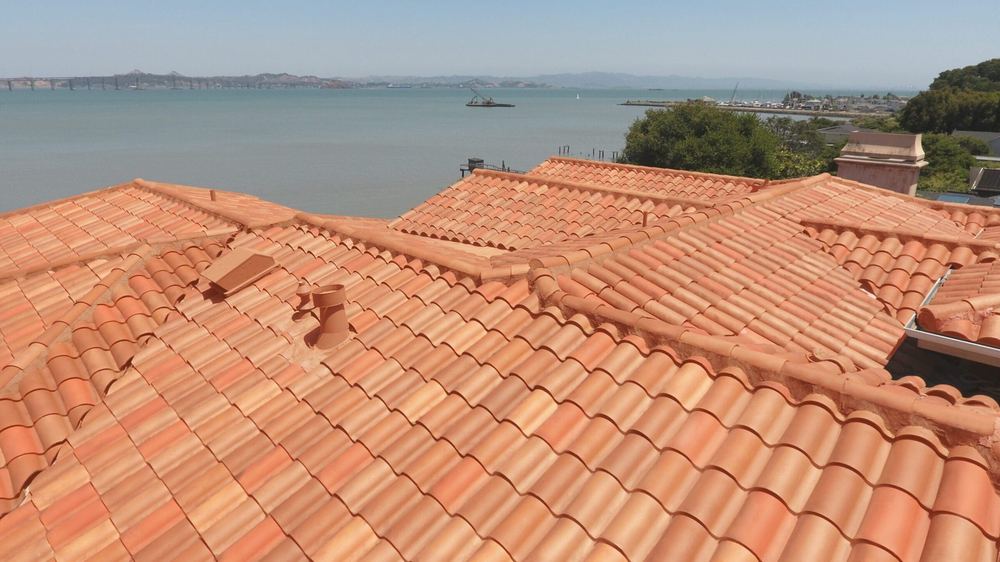
How a tile roof compares in West LA once service life is counted, with pitch and exposure taken into account.
Comparisons between roofing systems usually get made on price and appearance, which are the two things that matter least in ten years. For a tile roof in the Westside, here is what the comparison looks like once service life is included.
What actually matters
The tile is not what keeps water out. The tile is a rain screen and a sunshade; the underlayment beneath it is the actual waterproofing, and it is the part with the shorter life.
The difference that shows up later
Two systems that cost within a dollar of each other on the quote can differ by a decade in service, and the difference is in the detail rather than the material. Bird stops, eave closures and the mortar at the ridge are what most quotes leave out. Leave them off and you have an open roof edge that invites nesting, debris and, in the fire zones, embers. Ask how it is fixed down and how it drains before asking what it costs.
How the Westside settles it
The marine layer decides most of what happens here. Roofs sit damp until late morning for a good part of the year, dry out in the afternoon, and do it again the next day. That cycle is gentle on the material and hard on anything organic: north-facing slopes hold moss and algae, and shaded valleys stay wet long enough to rot a felt underlayment that would have been fine two miles inland. There is a wide spread of stock, from 1920s Spanish with original clay through to flat-roofed modern rebuilds, and the two need completely different attention.
What we look at on an inspection
- Underlayment age and condition, checked by lifting tile rather than guessing
- Broken, slipped and previously face-nailed tiles across the field
- Batten condition and fixing, particularly at the eave course
- Valley metal, which usually corrodes before the underlayment fails
- Ridge and hip mortar or mechanical fixing, and any movement in it
- Bird stops and eave closures, present and intact
- Flashing at walls, chimneys and every penetration through the field
Common questions
Can systems be mixed on one property?
Frequently, and on complex roofs it is often the right answer. Low-slope sections and steep sections genuinely want different materials.
Which option is best overall?
There is no overall. There is best for this roof pitch, this exposure and this budget, and those three narrow it down fast.
The honest summary
Judge a tile roof by its underlayment, not its tile. A roof that looks flawless from the driveway can be two winters from a ceiling repair, and the only way to know is to lift a few tiles and look. In the Westside the thing to watch is north slopes, shaded valleys and anywhere the morning damp does not clear by noon.
Free inspection, drone photography where access is difficult, and a written estimate with deck repair priced per sheet. No obligation.