
Coastal Corrosion and Metal Roofs in the San Fernando Valley — Before You Commit
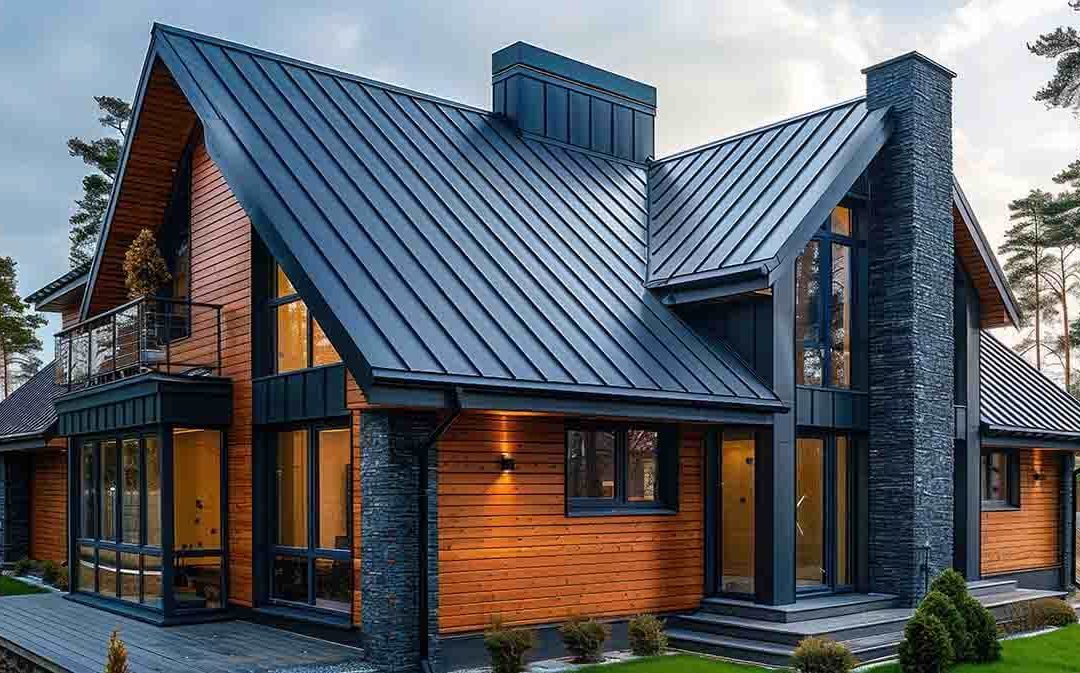
What goes wrong first on a metal roof in the Valley, in the order it happens.
Understanding why something fails is more useful than a list of symptoms, because the same symptom has several causes and they need different work. Here is what actually goes wrong with a metal roof in the San Fernando Valley, and what it looks like from the ground before it becomes a ceiling stain.
What actually goes wrong
Metal rarely wears out. What fails is the fixing. An exposed-fastener panel is screwed through its face, and every screw carries a rubber washer that hardens in this sun. After fifteen summers those washers shrink, the screws back out, and a roof with two thousand fasteners has two thousand small opportunities to leak.
Why it happens when it does
The cause and the symptom are rarely in the same place. Water tracks, so an entry point and a ceiling stain can be several feet apart. Thermal movement is the detail that decides everything. A long panel in this climate grows and shrinks measurably between a July afternoon and the following dawn, and a fixing system that does not allow for that movement will fight it until something gives. Catching it at that stage is the difference between a repair and a replacement.
How the San Fernando Valley makes it worse
Summer is the problem here. The Valley runs ten to fifteen degrees hotter than the coast and holds it for weeks, so a roof surface that reads 90 degrees in Santa Monica is well past 160 in Van Nuys by mid-afternoon. Everything on the roof expands into that heat and contracts again overnight, and it is that daily movement, not the peak temperature, that opens laps and backs fasteners out. Most of the housing went up between 1950 and 1975, which means original decking, undersized ventilation and at least one previous layer that somebody roofed straight over rather than tearing off.
What we look at on an inspection
- Fastener condition on any exposed-fix section, including washer hardening
- Clip engagement and any sign of thermal binding along standing seams
- Seam integrity down the full run, not only at the visible ends
- Coating condition, with particular attention to cut edges and scratches
- Sealant at penetrations, end laps and every transition
- Panel oil-canning, which is cosmetic but can point to fixing problems
- Corrosion at eaves, cut edges and any point where dissimilar metals meet
Common questions
Can this be repaired or does it need replacing?
It depends whether the cause is localised or systemic. A failed penetration is a repair; a covering that has gone brittle across the whole roof is not.
How urgent is it?
Anything open before the rains is urgent. Anything cosmetic can wait for a dry-season schedule, which is also when it is cheaper.
The honest summary
Metal is the longest-lived option available here, but only if the fixing system suits the movement. Ask how the panels are held down before you ask what they cost. In the San Fernando Valley the thing to watch is attic temperature and intake ventilation, because a Valley attic that cannot breathe cooks the underside of the roof as hard as the sun cooks the top.
Free inspection, drone photography where access is difficult, and a written estimate with deck repair priced per sheet. No obligation.
More on Metal Roofing
- Coastal Corrosion and Metal Roofs in Pasadena — Myths and FactsMetal Roofing
- Coastal Corrosion and Metal Roofs in the Westside — Costs and TimelinesMetal Roofing
- Coastal Corrosion and Metal Roofs in Southern California — Myths and FactsMetal Roofing
- Metal Roof Noise: What Homeowners Get Wrong — Inspection NotesMetal Roofing