
Cool Roof Savings on a Santa Monica Warehouse — What to Expect
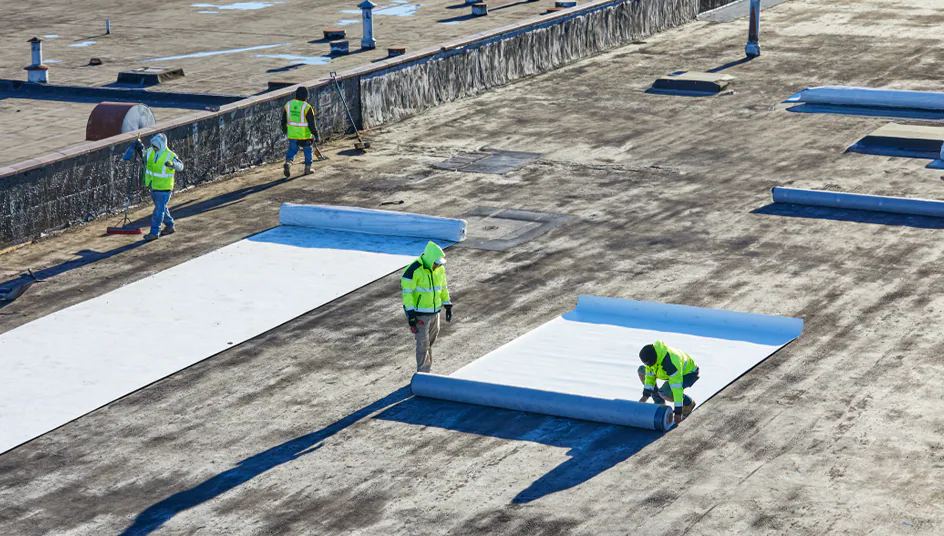
What to do about a TPO roof in West LA in the first forty-eight hours, and what not to touch first.
After a storm the useful work happens in the first two days, and most of it is documentation rather than repair. This is what to do about a TPO roof in the Westside once the wind drops.
What actually matters
Punctures are the most common TPO failure by a wide margin, and most of them are made by people rather than weather. Rooftop trades drop tools, drag equipment and set ladders down on a membrane that is perfectly capable of resisting rain and not at all capable of resisting a dropped screwdriver.
What to do in the first forty-eight hours
Document before you touch anything: wide photographs to establish the property, then close photographs of each item of damage, all dated. Weld testing is the item to insist on. A probe run along every seam while the crew is still on site costs nothing and finds the cold welds that would otherwise be discovered by a tenant in December. A tarp fixed through sound covering creates damage that was not there before.
How the Westside changes the answer
The marine layer decides most of what happens here. Roofs sit damp until late morning for a good part of the year, dry out in the afternoon, and do it again the next day. That cycle is gentle on the material and hard on anything organic: north-facing slopes hold moss and algae, and shaded valleys stay wet long enough to rot a felt underlayment that would have been fine two miles inland. There is a wide spread of stock, from 1920s Spanish with original clay through to flat-roofed modern rebuilds, and the two need completely different attention.
What we look at on an inspection
- Seam integrity, probed along the full length rather than spot-checked
- Punctures and abrasion, especially on traffic routes to rooftop plant
- Membrane shrinkage and any resulting tension at the perimeter
- Flashing and termination bar at every wall, curb and upstand
- Drain sumps and clamping rings, checked and clear
- Fastener plates showing through the membrane surface
- Weathering and chalking of the surface, particularly on exposed elevations
Common questions
How soon do I need to report it?
Check your policy, because most impose a reporting window. Reporting early costs nothing and protects the claim.
The damage looks minor. Is it?
Possibly not. Wind damage frequently looks trivial from the ground and turns out to have broken the seal across an entire elevation.
The honest summary
TPO is a good system installed properly and an expensive mistake installed quickly. Seams and punctures decide its life, so protect the surface and test the welds. In the Westside the thing to watch is north slopes, shaded valleys and anywhere the morning damp does not clear by noon.
Free inspection, drone photography where access is difficult, and a written estimate with deck repair priced per sheet. No obligation.