
Cool Roof Savings on a Southern California Warehouse in the San Gabriel Valley
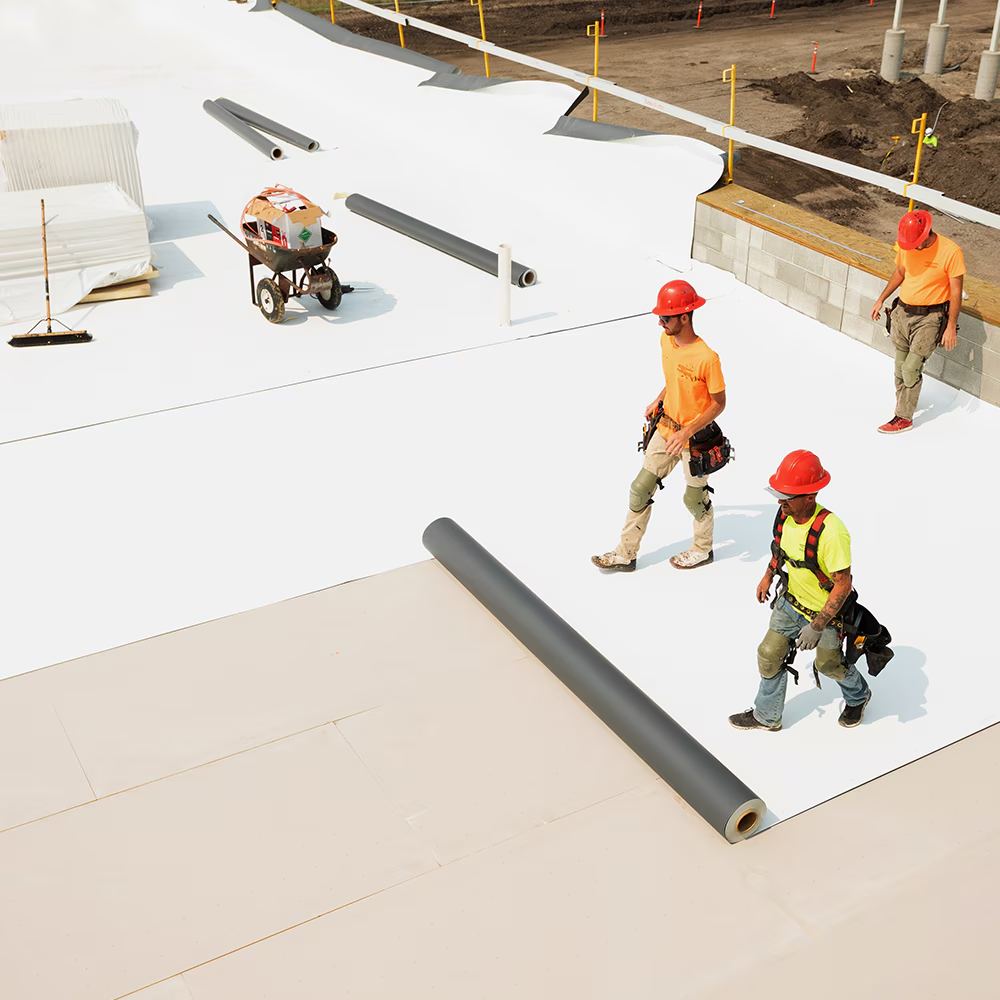
What goes wrong first on a TPO roof in the San Gabriel Valley, in the order it happens.
Understanding why something fails is more useful than a list of symptoms, because the same symptom has several causes and they need different work. Here is what actually goes wrong with a TPO roof in the San Gabriel Valley, and what it looks like from the ground before it becomes a ceiling stain.
What actually goes wrong
Punctures are the most common TPO failure by a wide margin, and most of them are made by people rather than weather. Rooftop trades drop tools, drag equipment and set ladders down on a membrane that is perfectly capable of resisting rain and not at all capable of resisting a dropped screwdriver.
Why it happens when it does
The cause and the symptom are rarely in the same place. Water tracks, so an entry point and a ceiling stain can be several feet apart. Weld testing is the item to insist on. A probe run along every seam while the crew is still on site costs nothing and finds the cold welds that would otherwise be discovered by a tenant in December. Catching it at that stage is the difference between a repair and a replacement.
How the San Gabriel Valley makes it worse
Heat and airborne grit arrive together. The Valley traps particulate against the hills, and that grit settles into every horizontal surface on the roof, then washes into the drainage in the first storm. Combine that with sustained summer heat and you get roofs that age from accumulated debris as much as from weather. Tile is everywhere, much of it laid in the 1960s and 1970s over a felt underlayment that has long outlived its design life while the tile above it looks perfect.
What we look at on an inspection
- Seam integrity, probed along the full length rather than spot-checked
- Punctures and abrasion, especially on traffic routes to rooftop plant
- Membrane shrinkage and any resulting tension at the perimeter
- Flashing and termination bar at every wall, curb and upstand
- Drain sumps and clamping rings, checked and clear
- Fastener plates showing through the membrane surface
- Weathering and chalking of the surface, particularly on exposed elevations
Common questions
How urgent is it?
Anything open before the rains is urgent. Anything cosmetic can wait for a dry-season schedule, which is also when it is cheaper.
The leak only shows up sometimes. Why?
Because water tracks. Entry point and stain point are frequently several feet apart, and wind direction decides whether a given storm drives water far enough to show.
The honest summary
TPO is a good system installed properly and an expensive mistake installed quickly. Seams and punctures decide its life, so protect the surface and test the welds. In the San Gabriel Valley the thing to watch is underlayment condition beneath sound-looking tile, and debris load in valleys and gutters.
Free inspection, drone photography where access is difficult, and a written estimate with deck repair priced per sheet. No obligation.
More on TPO Roofing
- Cool Roof Savings on a Pasadena Warehouse — Comparison in the foothill communitiesTPO Roofing
- Weld Testing: How TPO Seams Are Checked — Contractor PerspectiveTPO Roofing
- Sixty Mil or Eighty: Choosing TPO Thickness — Signs to WatchTPO Roofing
- How Long Does TPO Last in the Westside? — What Changed This YearTPO Roofing