
Cool Roof Savings on the South Bay Warehouse — Inspection Notes
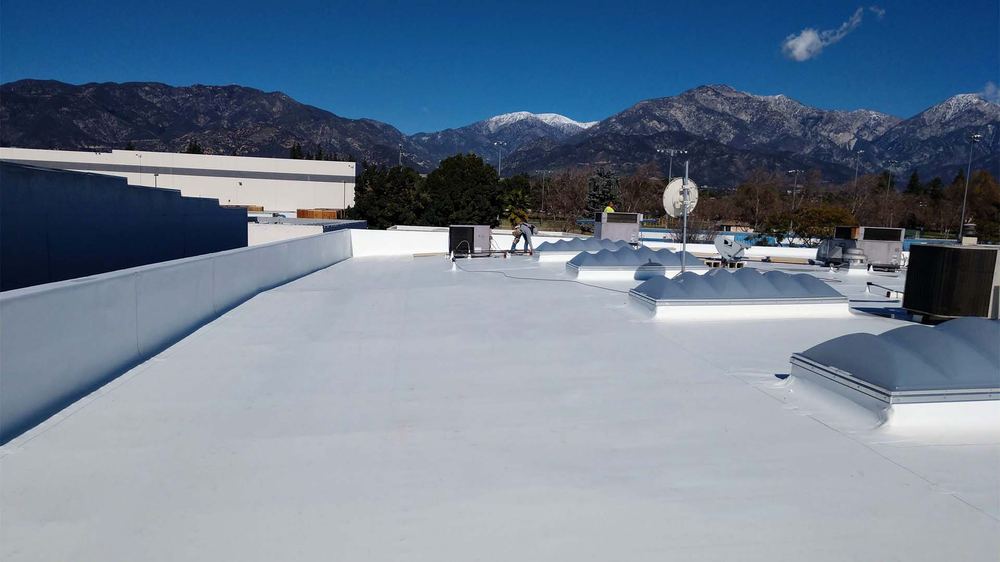
What a real inspection covers on a TPO roof in the South Bay, and what usually gets skipped.
A roof inspection is only as good as what gets looked at, and a lot of what gets called an inspection is a walk round the garden with a phone camera. This is what a real one covers on a TPO roof in the South Bay.
What actually matters
TPO is a single-ply membrane that is heat-welded rather than glued, which means the roof is only as good as its seams. A properly welded seam is stronger than the sheet either side of it; a cold weld looks identical and is not a seam at all. An inspection that does not account for that is looking at the wrong layer.
The detail that is usually left out
An inspection is only as good as what gets looked at, and photographs of specific defects are what let you get a second opinion without a second visit. Weld testing is the item to insist on. A probe run along every seam while the crew is still on site costs nothing and finds the cold welds that would otherwise be discovered by a tenant in December. Anything under half an hour on an average house has skipped something.
What is specific to the South Bay
Salt is the deciding factor within about three miles of the water. It settles on the roof, dissolves in the morning damp and goes after every cut edge, every fastener head and every piece of flashing that is not properly specified. A roof built to a Valley specification will show rust streaking at the eaves here inside ten years, and the material around it will still be sound. A lot of the housing is single-storey post-war with later second-storey additions, which puts a transition detail in the middle of the roof where two eras of workmanship meet.
The full inspection list
- Seam integrity, probed along the full length rather than spot-checked
- Punctures and abrasion, especially on traffic routes to rooftop plant
- Membrane shrinkage and any resulting tension at the perimeter
- Flashing and termination bar at every wall, curb and upstand
- Drain sumps and clamping rings, checked and clear
- Fastener plates showing through the membrane surface
- Weathering and chalking of the surface, particularly on exposed elevations
Common questions
How long should an inspection take?
Long enough to get on the roof and into the attic. Anything under half an hour on an average house has skipped something.
Should I expect photographs?
Yes, and of the specific defects rather than general views. Photographs are what let you get a second opinion without a second visit.
The honest summary
TPO is a good system installed properly and an expensive mistake installed quickly. Seams and punctures decide its life, so protect the surface and test the welds. In the South Bay the thing to watch is fastener and flashing corrosion, cut edges, and the junction where an addition meets the original roof.
Free inspection, drone photography where access is difficult, and a written estimate with deck repair priced per sheet. No obligation.