
Hail in the Westside: Rare but Real — Questions to Ask
What to do about storm damage in West LA in the first forty-eight hours, and why the order matters.
Storm response has an order to it, and getting the order wrong costs money. For storm damage in the Westside, here is what to do first, second and third.
What actually matters
Wind does not usually take a whole roof. It finds one lifted edge, one poorly fixed ridge or one loose flashing, and works from there. That is why post-storm damage so often looks minor from the ground and turns out not to be.
What to do in the first forty-eight hours
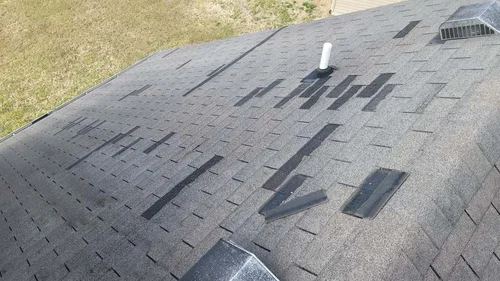
Document before you touch anything: wide photographs to establish the property, then close photographs of each item of damage, all dated. Temporary protection has to be done in a way that does not cause its own damage. A tarp fixed through a sound part of the covering creates new holes in a roof that did not have them. A tarp fixed through sound covering creates damage that was not there before.
How the Westside changes the answer
The marine layer decides most of what happens here. Roofs sit damp until late morning for a good part of the year, dry out in the afternoon, and do it again the next day. That cycle is gentle on the material and hard on anything organic: north-facing slopes hold moss and algae, and shaded valleys stay wet long enough to rot a felt underlayment that would have been fine two miles inland. There is a wide spread of stock, from 1920s Spanish with original clay through to flat-roofed modern rebuilds, and the two need completely different attention.
What we look at on an inspection
- Displaced, lifted or missing units, slope by slope
- Seal integrity on the windward elevation, checked by hand
- Ridge, hip and perimeter fixing after wind loading
- Impact marks, splits and any debris strike on the surface
- Flashing displacement at walls, chimneys and penetrations
- Gutters and downpipes for detachment and blockage
- Interior and attic inspection for water entry already in progress
Common questions
Should I get a tarp on it straight away?
Only once it is photographed, and only if it can be fixed without putting new holes through sound covering. A badly fixed tarp creates damage that was not there before.
How soon do I need to report it?
Check your policy, because most impose a reporting window. Reporting early costs nothing and protects the claim.
The honest summary
Get it documented, get it protected without adding damage, then get it assessed properly. Those three things in that order account for most good storm outcomes. In the Westside the thing to watch is north slopes, shaded valleys and anywhere the morning damp does not clear by noon.
Free inspection, drone photography where access is difficult, and a written estimate with deck repair priced per sheet. No obligation.