
How Long Do Asphalt Shingles Last in LA? — Long-Term View
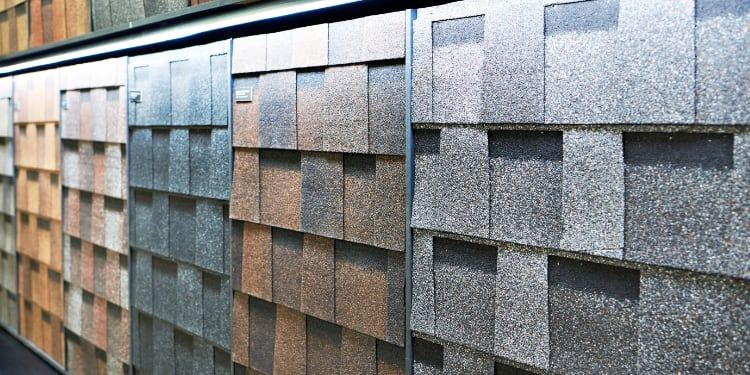
How long an asphalt shingle roof really lasts in Santa Clarita, and what shortens it.
The number on the wrapper and the number you get are two different things. In the Santa Clarita Valley, an asphalt shingle roof realistically gives eighteen to twenty-five years in this climate, which is short of the number printed on the wrapper, and the gap between that and the printed figure is explained by conditions the manufacturer never tested for.
What decides how long it lasts
A shingle roof is a water-shedding system, not a waterproof one. Every course relies on the course above it and on the underlayment beneath, so the covering and the layer under it fail together and have to be judged together. Asphalt ages from the top down. The granules on the surface are the sunscreen; once ultraviolet has stripped enough of them the mat underneath goes brittle, curls at the edges and starts to crack. Granules in the gutter are the earliest honest signal, and they show up years before a leak does.
Why the warranty number is not the answer
A warranty is a commercial document, not a life expectancy. It covers the product against manufacturing defect, and manufacturing defect is not what ends roofs here. The starter course and the drip edge are where cheap work shows first. A starter strip laid the wrong way round, or an eave with no metal under the first course, will wick water back into the fascia no matter how good the shingles above it are. Installation and ventilation decide the real number, and neither of them appears in the warranty document.
How the Santa Clarita Valley changes the answer
Two things run hard here: ultraviolet and wind. The elevation and the clear air mean roof surfaces take more UV than they do down in the basin, and the passes funnel wind that arrives with a lot more force than the forecast suggests. Wind does not usually take a whole roof; it finds the one edge that was never properly fixed and works from there. Much of it is tract housing from the 1980s onward, so the roofs are of an age where the original covering is at or past the end of its service life while the structure underneath is still sound.
What we look at on an inspection
- Granule loss across the field, and how much is sitting in the gutters
- Curling, cupping or cracking, particularly on the sun-facing slopes
- Nail placement and whether shingles have begun to back off the deck
- Valley construction, and whether it is woven, closed-cut or metal-lined
- Flashing at every wall, chimney, skylight and pipe penetration
- Deck condition underfoot, checked by walking rather than by eye
- Attic ventilation, both intake at the eave and exhaust at the ridge
Common questions
Can I extend the life of what I already have?
Often, yes. Clearing drainage, renewing sealant and fixing small failures early adds years, and it is far cheaper than the alternative.
How do I know where in that range my roof sits?
Age is a starting point, not an answer. Condition of the fixings, the flashing and the layer beneath the covering tells you far more.
The honest summary
Shingle roofs rarely fail suddenly. They give years of warning through granule loss and edge curl, and the difference between a planned replacement and an emergency one is usually whether anybody was looking. In the Santa Clarita Valley the thing to watch is perimeter and edge fixing, ridge attachment, and anything on the windward side that has started to lift.
Free inspection, drone photography where access is difficult, and a written estimate with deck repair priced per sheet. No obligation.
More on Shingle Roofing
- How Long Do Asphalt Shingles Last in the South Bay? — Common MistakesShingle Roofing
- Choosing a Shingle for Santa Monica UV Load — Before You CommitShingle Roofing
- Choosing a Shingle for Orange County UV Load — Materials ComparedShingle Roofing
- Choosing a Shingle for Los Angeles UV Load — Before You CommitShingle Roofing