
How Long Does TPO Last in Southern California? — What to Expect
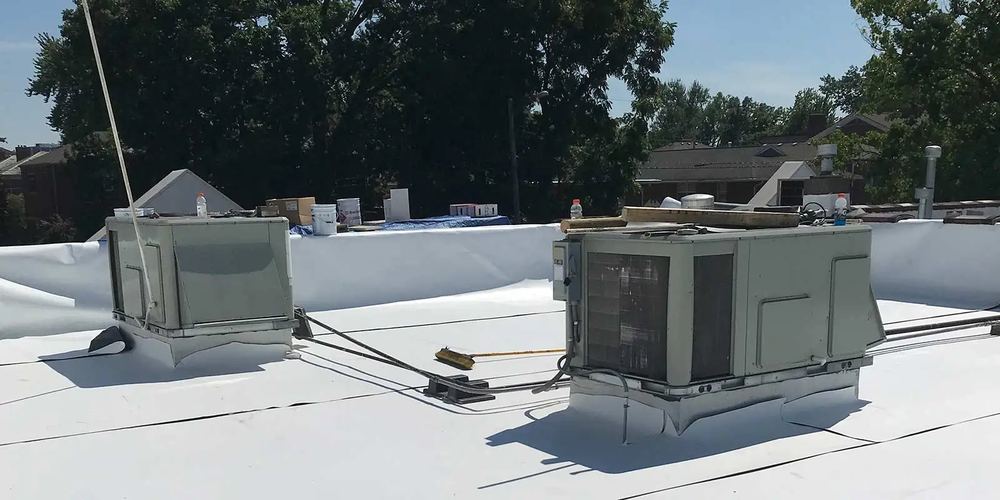
How long a TPO roof really lasts in Central LA, as opposed to what the wrapper claims.
The number on the wrapper and the number you get are two different things. In Central Los Angeles, a TPO roof realistically gives twenty to thirty years when the welds are sound, and considerably less when they are not, and the gap between that and the printed figure is explained by conditions the manufacturer never tested for.
What decides how long it lasts
TPO is a single-ply membrane that is heat-welded rather than glued, which means the roof is only as good as its seams. A properly welded seam is stronger than the sheet either side of it; a cold weld looks identical and is not a seam at all. Punctures are the most common TPO failure by a wide margin, and most of them are made by people rather than weather. Rooftop trades drop tools, drag equipment and set ladders down on a membrane that is perfectly capable of resisting rain and not at all capable of resisting a dropped screwdriver.
Why the warranty number is not the answer
A warranty is a commercial document, not a life expectancy. It covers the product against manufacturing defect, and manufacturing defect is not what ends roofs here. Weld testing is the item to insist on. A probe run along every seam while the crew is still on site costs nothing and finds the cold welds that would otherwise be discovered by a tenant in December. Installation and ventilation decide the real number, and neither of them appears in the warranty document.
How Central Los Angeles changes the answer
Weather is only half of it here. Buildings sit close together, roofs are often overlooked by taller neighbours, and access is genuinely difficult on a lot of properties. Sustained heat and UV do the material damage; the density decides how the work has to be scheduled and staged. Older multi-family and mixed-use is common, usually low-slope behind a parapet, and often with several decades of layered repairs on top.
What we look at on an inspection
- Seam integrity, probed along the full length rather than spot-checked
- Punctures and abrasion, especially on traffic routes to rooftop plant
- Membrane shrinkage and any resulting tension at the perimeter
- Flashing and termination bar at every wall, curb and upstand
- Drain sumps and clamping rings, checked and clear
- Fastener plates showing through the membrane surface
- Weathering and chalking of the surface, particularly on exposed elevations
Common questions
Does a longer warranty mean a longer life?
Not by itself. Warranties cover manufacturing defects, and manufacturing defects are not what ends most roofs. Installation and ventilation decide the actual service life.
Can I extend the life of what I already have?
Often, yes. Clearing drainage, renewing sealant and fixing small failures early adds years, and it is far cheaper than the alternative.
The honest summary
TPO is a good system installed properly and an expensive mistake installed quickly. Seams and punctures decide its life, so protect the surface and test the welds. In Central Los Angeles the thing to watch is parapet and counterflashing detail, layered previous repairs, and safe access for the work itself.
Free inspection, drone photography where access is difficult, and a written estimate with deck repair priced per sheet. No obligation.