
Is a Metal Roof Worth It in the San Fernando Valley? — Inspection Notes
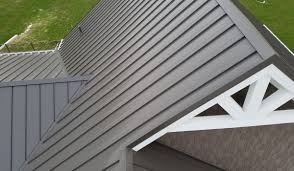
What moves the number on a metal roof in the Valley, and the line item that decides it.
Price is the first thing anybody wants and the last thing most contractors will commit to. The working figure for a metal roof in the San Fernando Valley is $12.00 to $18.00 a square foot installed, and the rest of this explains what moves it, because the same roof can differ by half again depending on things you can check yourself before anyone quotes.
What you are actually paying for
Standing seam costs more than exposed-fastener and is worth it in almost every case here, because concealed clips let the panel expand and contract without loosening anything. Panel gauge, coating grade and the number of penetrations to flash around account for most of the rest.
Where quotes diverge
Deck repair should be priced per sheet in writing before work starts, because it is the one item nobody can size until the covering comes off. Thermal movement is the detail that decides everything. A long panel in this climate grows and shrinks measurably between a July afternoon and the following dawn, and a fixing system that does not allow for that movement will fight it until something gives. It is also the line that most often separates two quotes that looked identical on page one.
How the San Fernando Valley changes the figure
Summer is the problem here. The Valley runs ten to fifteen degrees hotter than the coast and holds it for weeks, so a roof surface that reads 90 degrees in Santa Monica is well past 160 in Van Nuys by mid-afternoon. Everything on the roof expands into that heat and contracts again overnight, and it is that daily movement, not the peak temperature, that opens laps and backs fasteners out. Most of the housing went up between 1950 and 1975, which means original decking, undersized ventilation and at least one previous layer that somebody roofed straight over rather than tearing off.
What we look at before quoting
- Fastener condition on any exposed-fix section, including washer hardening
- Clip engagement and any sign of thermal binding along standing seams
- Seam integrity down the full run, not only at the visible ends
- Coating condition, with particular attention to cut edges and scratches
- Sealant at penetrations, end laps and every transition
- Panel oil-canning, which is cosmetic but can point to fixing problems
- Corrosion at eaves, cut edges and any point where dissimilar metals meet
Common questions
Can I get an accurate price without an inspection?
You can get a range. You cannot get a price, because nobody knows the deck condition until the covering comes off, which is why the per-sheet repair rate belongs in the estimate.
Is financing worth it on a roof?
It depends on the alternative. Deferring a failing roof through another wet season usually costs more in interior repairs than the finance charge would have.
The honest summary
Metal is the longest-lived option available here, but only if the fixing system suits the movement. Ask how the panels are held down before you ask what they cost. In the San Fernando Valley the thing to watch is attic temperature and intake ventilation, because a Valley attic that cannot breathe cooks the underside of the roof as hard as the sun cooks the top.
Free inspection, drone photography where access is difficult, and a written estimate with deck repair priced per sheet. No obligation.
More on Metal Roofing
- Thermal Movement: Why Metal Panels Need Clips — Budget PlanningMetal Roofing
- Standing Seam vs Corrugated: Which Suits Long Beach? — A Practical GuideMetal Roofing
- Metal Roofing and Fire Zones in Southern California — Step by StepMetal Roofing
- Coastal Corrosion and Metal Roofs in Burbank — Before You CommitMetal Roofing