
Matching Discontinued Tile Profiles in the LA Basin — What to Expect
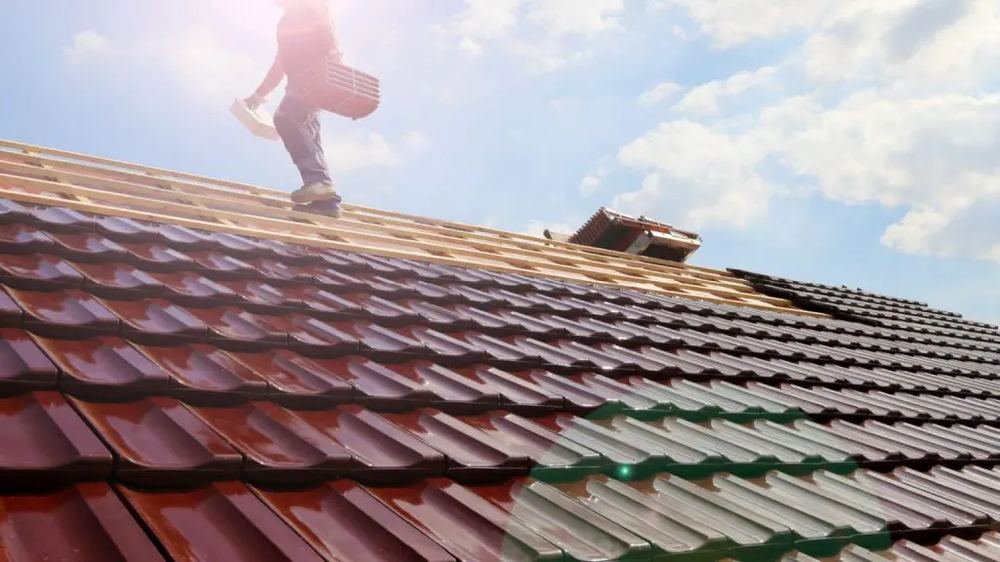
How long a tile roof really lasts in Santa Clarita, as opposed to what the wrapper claims.
The number on the wrapper and the number you get are two different things. In the Santa Clarita Valley, a tile roof realistically gives fifty years or more for the tile, but only fifteen to twenty-five for the underlayment beneath it, and the gap between that and the printed figure is explained by conditions the manufacturer never tested for.
What decides how long it lasts
The tile is not what keeps water out. The tile is a rain screen and a sunshade; the underlayment beneath it is the actual waterproofing, and it is the part with the shorter life. What fails on a tile roof is almost never the tile. Felt underlayment bakes under the tile for two decades, goes brittle, tears at the fastener holes and stops shedding water. From the street the roof looks perfect right up to the day a ceiling stains.
Why the warranty number is not the answer
A warranty is a commercial document, not a life expectancy. It covers the product against manufacturing defect, and manufacturing defect is not what ends roofs here. Bird stops, eave closures and the mortar at the ridge are what most quotes leave out. Leave them off and you have an open roof edge that invites nesting, debris and, in the fire zones, embers. Installation and ventilation decide the real number, and neither of them appears in the warranty document.
How the Santa Clarita Valley changes the answer
Two things run hard here: ultraviolet and wind. The elevation and the clear air mean roof surfaces take more UV than they do down in the basin, and the passes funnel wind that arrives with a lot more force than the forecast suggests. Wind does not usually take a whole roof; it finds the one edge that was never properly fixed and works from there. Much of it is tract housing from the 1980s onward, so the roofs are of an age where the original covering is at or past the end of its service life while the structure underneath is still sound.
What we look at on an inspection
- Underlayment age and condition, checked by lifting tile rather than guessing
- Broken, slipped and previously face-nailed tiles across the field
- Batten condition and fixing, particularly at the eave course
- Valley metal, which usually corrodes before the underlayment fails
- Ridge and hip mortar or mechanical fixing, and any movement in it
- Bird stops and eave closures, present and intact
- Flashing at walls, chimneys and every penetration through the field
Common questions
Does a longer warranty mean a longer life?
Not by itself. Warranties cover manufacturing defects, and manufacturing defects are not what ends most roofs. Installation and ventilation decide the actual service life.
Can I extend the life of what I already have?
Often, yes. Clearing drainage, renewing sealant and fixing small failures early adds years, and it is far cheaper than the alternative.
The honest summary
Judge a tile roof by its underlayment, not its tile. A roof that looks flawless from the driveway can be two winters from a ceiling repair, and the only way to know is to lift a few tiles and look. In the Santa Clarita Valley the thing to watch is perimeter and edge fixing, ridge attachment, and anything on the windward side that has started to lift.
Free inspection, drone photography where access is difficult, and a written estimate with deck repair priced per sheet. No obligation.
More on Tile Roofing
- Matching Discontinued Tile Profiles in Southern California — The Short AnswerTile Roofing
- Matching Discontinued Tile Profiles in Pasadena — Long-Term ViewTile Roofing
- Matching Discontinued Tile Profiles in the Westside — The Short AnswerTile Roofing
- Why Tile Underlayment Fails Before the Tile — Questions to AskTile Roofing