
Mechanically Fastened vs Fully Adhered TPO — Signs to Watch
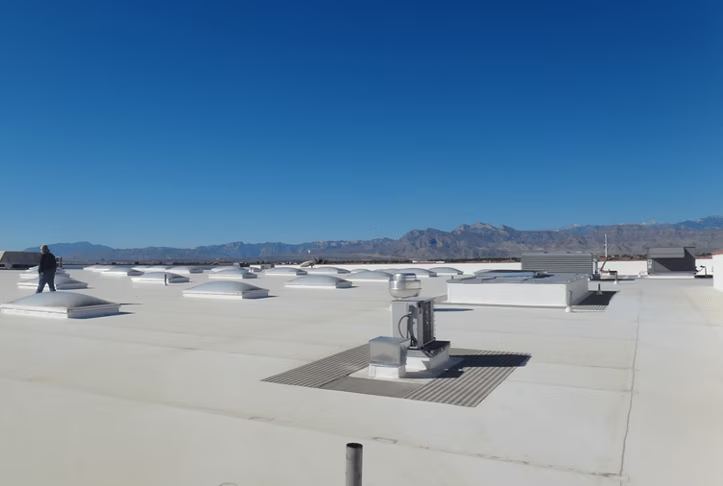
How a TPO roof compares in the South Bay once service life is counted, and where each one wins.
Comparisons between roofing systems usually get made on price and appearance, which are the two things that matter least in ten years. For a TPO roof in the South Bay, here is what the comparison looks like once service life is included.
What actually matters
TPO is a single-ply membrane that is heat-welded rather than glued, which means the roof is only as good as its seams. A properly welded seam is stronger than the sheet either side of it; a cold weld looks identical and is not a seam at all.
The difference that shows up later
Two systems that cost within a dollar of each other on the quote can differ by a decade in service, and the difference is in the detail rather than the material. Weld testing is the item to insist on. A probe run along every seam while the crew is still on site costs nothing and finds the cold welds that would otherwise be discovered by a tenant in December. Ask how it is fixed down and how it drains before asking what it costs.
How the South Bay settles it
Salt is the deciding factor within about three miles of the water. It settles on the roof, dissolves in the morning damp and goes after every cut edge, every fastener head and every piece of flashing that is not properly specified. A roof built to a Valley specification will show rust streaking at the eaves here inside ten years, and the material around it will still be sound. A lot of the housing is single-storey post-war with later second-storey additions, which puts a transition detail in the middle of the roof where two eras of workmanship meet.
What we look at on an inspection
- Seam integrity, probed along the full length rather than spot-checked
- Punctures and abrasion, especially on traffic routes to rooftop plant
- Membrane shrinkage and any resulting tension at the perimeter
- Flashing and termination bar at every wall, curb and upstand
- Drain sumps and clamping rings, checked and clear
- Fastener plates showing through the membrane surface
- Weathering and chalking of the surface, particularly on exposed elevations
Common questions
Is the more expensive option always longer-lived?
Usually, but not always, and installation quality closes the gap in both directions. A well-installed mid-range system beats a badly installed premium one every time.
Can systems be mixed on one property?
Frequently, and on complex roofs it is often the right answer. Low-slope sections and steep sections genuinely want different materials.
The honest summary
TPO is a good system installed properly and an expensive mistake installed quickly. Seams and punctures decide its life, so protect the surface and test the welds. In the South Bay the thing to watch is fastener and flashing corrosion, cut edges, and the junction where an addition meets the original roof.
Free inspection, drone photography where access is difficult, and a written estimate with deck repair priced per sheet. No obligation.