
Metal Roofing and Fire Zones in Long Beach
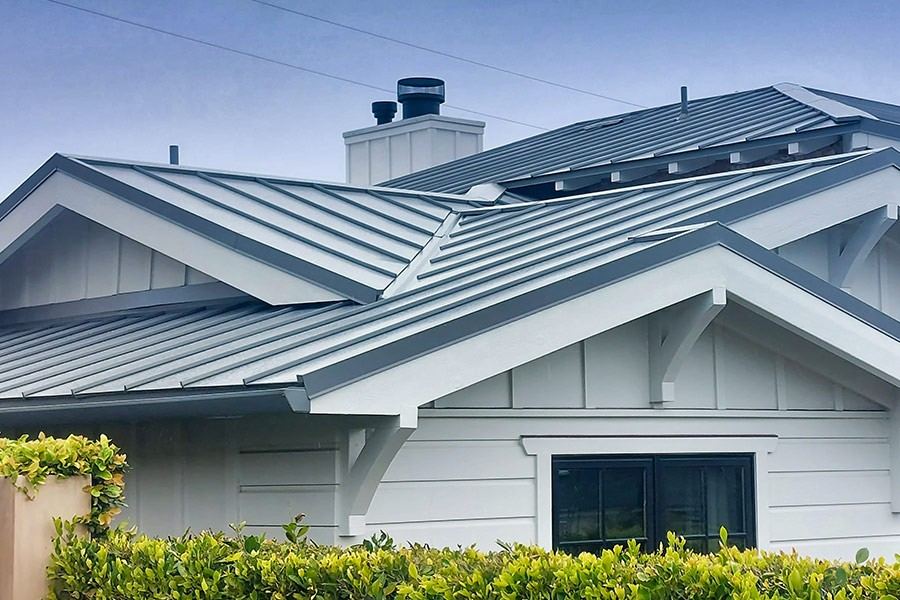
What to do about a metal roof in the Harbor Area in the first forty-eight hours, and what to leave until Monday.
After a storm the useful work happens in the first two days, and most of it is documentation rather than repair. This is what to do about a metal roof in the Harbor Area once the wind drops.
What actually matters
Metal rarely wears out. What fails is the fixing. An exposed-fastener panel is screwed through its face, and every screw carries a rubber washer that hardens in this sun. After fifteen summers those washers shrink, the screws back out, and a roof with two thousand fasteners has two thousand small opportunities to leak.
What to do in the first forty-eight hours
Document before you touch anything: wide photographs to establish the property, then close photographs of each item of damage, all dated. Thermal movement is the detail that decides everything. A long panel in this climate grows and shrinks measurably between a July afternoon and the following dawn, and a fixing system that does not allow for that movement will fight it until something gives. A tarp fixed through sound covering creates damage that was not there before.
How the Harbor Area changes the answer
Humidity stays high, salt is constant, and industrial fallout settles on top of both. Flat and low-slope roofs dominate the commercial stock here, and a membrane that would give twenty years in a dry inland setting can give noticeably less with that combination working on it every day. Much of the building stock is older commercial and industrial with large low-slope areas, parapets, and rooftop plant that gets walked on regularly.
What we look at on an inspection
- Fastener condition on any exposed-fix section, including washer hardening
- Clip engagement and any sign of thermal binding along standing seams
- Seam integrity down the full run, not only at the visible ends
- Coating condition, with particular attention to cut edges and scratches
- Sealant at penetrations, end laps and every transition
- Panel oil-canning, which is cosmetic but can point to fixing problems
- Corrosion at eaves, cut edges and any point where dissimilar metals meet
Common questions
Should I get a tarp on it straight away?
Only once it is photographed, and only if it can be fixed without putting new holes through sound covering. A badly fixed tarp creates damage that was not there before.
How soon do I need to report it?
Check your policy, because most impose a reporting window. Reporting early costs nothing and protects the claim.
The honest summary
Metal is the longest-lived option available here, but only if the fixing system suits the movement. Ask how the panels are held down before you ask what they cost. In the Harbor Area the thing to watch is membrane condition around rooftop plant, parapet terminations, and every drain and scupper on the roof.
Free inspection, drone photography where access is difficult, and a written estimate with deck repair priced per sheet. No obligation.
More on Metal Roofing
- How Long Does a Metal Roof Last in Santa Monica? — Quick ReferenceMetal Roofing
- How Long Does a Metal Roof Last in Orange County? — Signs to WatchMetal Roofing
- How Long Does a Metal Roof Last in Los Angeles? — Quick ReferenceMetal Roofing
- How Long Does a Metal Roof Last in Santa Monica? — Signs to WatchMetal Roofing