
Permits and Fees in Burbank — Questions to Ask
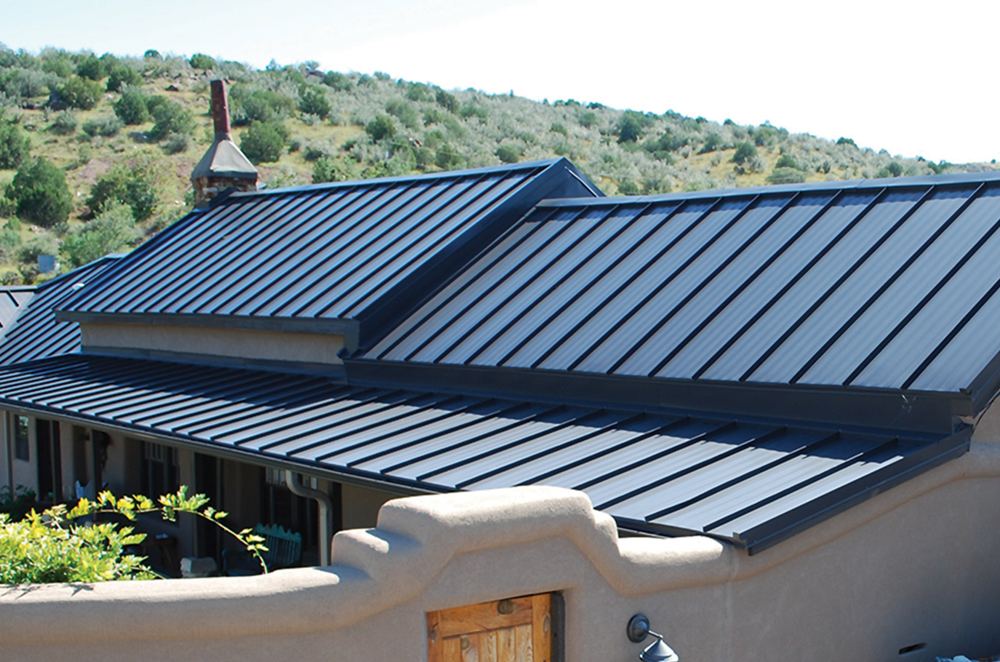
How long a roof replacement really lasts in the Valley, and what shortens it.
The number on the wrapper and the number you get are two different things. In the San Fernando Valley, a roof replacement realistically gives worth measuring as cost per year of service rather than as a single number, and the gap between that and the printed figure is explained by conditions the manufacturer never tested for.
What decides how long it lasts
The headline price on a roofing quote is the least useful part of it. What matters is what is included, what has been assumed, and what happens to the number when the roof is opened up. Quotes diverge on assumptions, not on greed. One contractor has allowed for deck repair and one has not; one has priced a tear-off of two layers and one has priced a single layer. The cheap quote frequently becomes the expensive one in week two.
Why the warranty number is not the answer
A warranty is a commercial document, not a life expectancy. It covers the product against manufacturing defect, and manufacturing defect is not what ends roofs here. Deck repair should be priced per sheet in writing before work starts. It is the one item nobody can size accurately until the covering comes off, and it is the most common source of mid-job disputes. Installation and ventilation decide the real number, and neither of them appears in the warranty document.
How the San Fernando Valley changes the answer
Summer is the problem here. The Valley runs ten to fifteen degrees hotter than the coast and holds it for weeks, so a roof surface that reads 90 degrees in Santa Monica is well past 160 in Van Nuys by mid-afternoon. Everything on the roof expands into that heat and contracts again overnight, and it is that daily movement, not the peak temperature, that opens laps and backs fasteners out. Most of the housing went up between 1950 and 1975, which means original decking, undersized ventilation and at least one previous layer that somebody roofed straight over rather than tearing off.
What we look at on an inspection
- Number of existing layers to be removed and disposed of
- Deck repair rate, stated per sheet in the written estimate
- Underlayment specification, by name rather than by description
- Flashing: replaced or reused, item by item
- Ventilation work included in the scope
- Permit and inspection responsibility
- Payment schedule, and what triggers each stage
Common questions
Can I extend the life of what I already have?
Often, yes. Clearing drainage, renewing sealant and fixing small failures early adds years, and it is far cheaper than the alternative.
How do I know where in that range my roof sits?
Age is a starting point, not an answer. Condition of the fixings, the flashing and the layer beneath the covering tells you far more.
The honest summary
Compare scopes, not totals. Two quotes on the same roof that differ by thousands are usually pricing two different pieces of work, and the difference is almost always written in the exclusions. In the San Fernando Valley the thing to watch is attic temperature and intake ventilation, because a Valley attic that cannot breathe cooks the underside of the roof as hard as the sun cooks the top.
Free inspection, drone photography where access is difficult, and a written estimate with deck repair priced per sheet. No obligation.
More on Costs & Financing
- Permits and Fees in the Westside — Materials ComparedCosts & Financing
- Permits and Fees in Southern California — Before You CommitCosts & Financing
- Permits and Fees in Pasadena — Materials ComparedCosts & Financing
- Cheap Bids: What Gets Left OutCosts & Financing