
Punctures: The Most Common TPO Failure — Signs to Watch
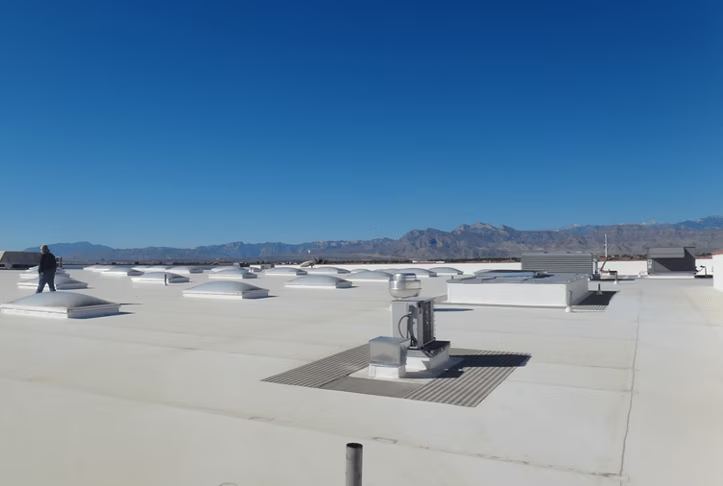
What you can check on a TPO roof in the foothills from the ground, safely, in ten minutes.
You can learn a lot about a roof without going anywhere near it, and none of the checks worth doing require climbing. This is what to look at on a TPO roof in the foothill communities, safely, from the ground.
What you can check yourself
TPO is a single-ply membrane that is heat-welded rather than glued, which means the roof is only as good as its seams. A properly welded seam is stronger than the sheet either side of it; a cold weld looks identical and is not a seam at all.
What to leave alone
Stay on the ground and use the attic. Binoculars from the driveway and a torch in the roof space find nearly everything worth finding. Weld testing is the item to insist on. A probe run along every seam while the crew is still on site costs nothing and finds the cold welds that would otherwise be discovered by a tenant in December. As soon as you find something you cannot explain, stop looking and get it assessed.
What is specific to the foothill communities
Fire exposure changes the specification before weather is even discussed. Ember fall, not flame, is what starts most roof fires, and embers find their way into ventilation openings, under tile at the eave and into any gap at the ridge. Everything else here follows from that: heat, tree overhang and debris load are real, but the fire detail comes first. A mix of older custom homes and newer builds, frequently under mature tree cover that drops debris into the valleys year-round.
What we look at on an inspection
- Seam integrity, probed along the full length rather than spot-checked
- Punctures and abrasion, especially on traffic routes to rooftop plant
- Membrane shrinkage and any resulting tension at the perimeter
- Flashing and termination bar at every wall, curb and upstand
- Drain sumps and clamping rings, checked and clear
- Fastener plates showing through the membrane surface
- Weathering and chalking of the surface, particularly on exposed elevations
Common questions
Is it safe to get on my own roof?
Generally no, and it is worth being blunt about it. Falls are the most common serious injury in this trade, and walking on a roof can damage the covering.
What can I check from inside?
A great deal. The attic shows staining, daylight through the deck and ventilation problems long before anything appears on a ceiling.
The honest summary
TPO is a good system installed properly and an expensive mistake installed quickly. Seams and punctures decide its life, so protect the surface and test the welds. In the foothill communities the thing to watch is ember-resistant detailing at eaves, ridges and vents, plus tree overhang and debris in every valley.
Free inspection, drone photography where access is difficult, and a written estimate with deck repair priced per sheet. No obligation.