
Reading a Flat Roof Moisture Survey — Myths and Facts
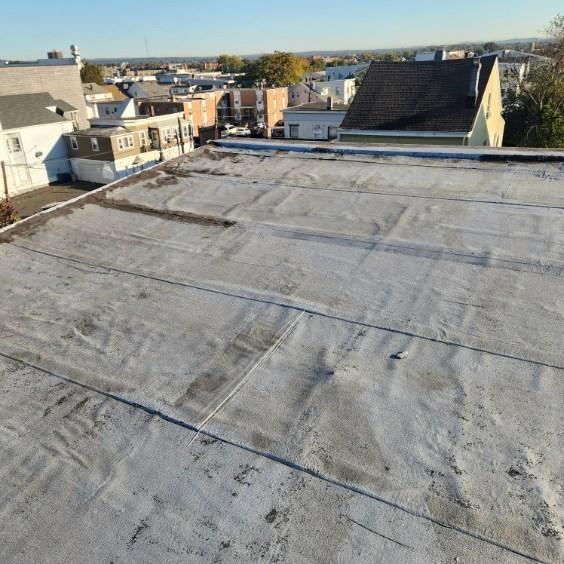
What a real inspection covers on a flat roof in Santa Clarita, and what usually gets skipped.
A roof inspection is only as good as what gets looked at, and a lot of what gets called an inspection is a walk round the garden with a phone camera. This is what a real one covers on a flat roof in the Santa Clarita Valley.
What actually matters
Flat roofs are not flat. They are built with fall, and the fall is what keeps them alive. Every other detail is secondary to whether water leaves the roof. An inspection that does not account for that is looking at the wrong layer.
The detail that is usually left out
An inspection is only as good as what gets looked at, and photographs of specific defects are what let you get a second opinion without a second visit. Drainage does not fail in the storm; it fails in the eight dry months beforehand. A drain that has been dry since April collects grit, leaves and debris, and nobody looks at it until water is coming through a ceiling. Anything under half an hour on an average house has skipped something.
What is specific to the Santa Clarita Valley
Two things run hard here: ultraviolet and wind. The elevation and the clear air mean roof surfaces take more UV than they do down in the basin, and the passes funnel wind that arrives with a lot more force than the forecast suggests. Wind does not usually take a whole roof; it finds the one edge that was never properly fixed and works from there. Much of it is tract housing from the 1980s onward, so the roofs are of an age where the original covering is at or past the end of its service life while the structure underneath is still sound.
The full inspection list
- Fall across the roof, and any area holding water beyond forty-eight hours
- Drain and scupper clearance, including underneath every strainer
- Membrane condition across the whole field, not only at the edges
- Flashing at every penetration, curb and item of rooftop plant
- Parapet termination and counterflashing along the full perimeter
- Insulation moisture, established by probe rather than by eye
- Evidence and quality of previous patching
Common questions
How long should an inspection take?
Long enough to get on the roof and into the attic. Anything under half an hour on an average house has skipped something.
Should I expect photographs?
Yes, and of the specific defects rather than general views. Photographs are what let you get a second opinion without a second visit.
The honest summary
Ponding, blocked drainage and failed penetration detail account for nearly every flat roof call we take. If a quote does not mention drainage, it is a quote to recreate the same problem in a new material. In the Santa Clarita Valley the thing to watch is perimeter and edge fixing, ridge attachment, and anything on the windward side that has started to lift.
Free inspection, drone photography where access is difficult, and a written estimate with deck repair priced per sheet. No obligation.
More on Flat Roofs
- What a Flat Roof Replacement Costs in Glendale — What Changed This YearFlat Roofs
- What a Flat Roof Replacement Costs in the Valley — What to ExpectFlat Roofs
- What a Flat Roof Replacement Costs in the South Bay — What Changed This YearFlat Roofs
- What a Flat Roof Replacement Costs in Glendale — What to ExpectFlat Roofs