
Reflectivity and Burbank Cooling Bills — Materials Compared
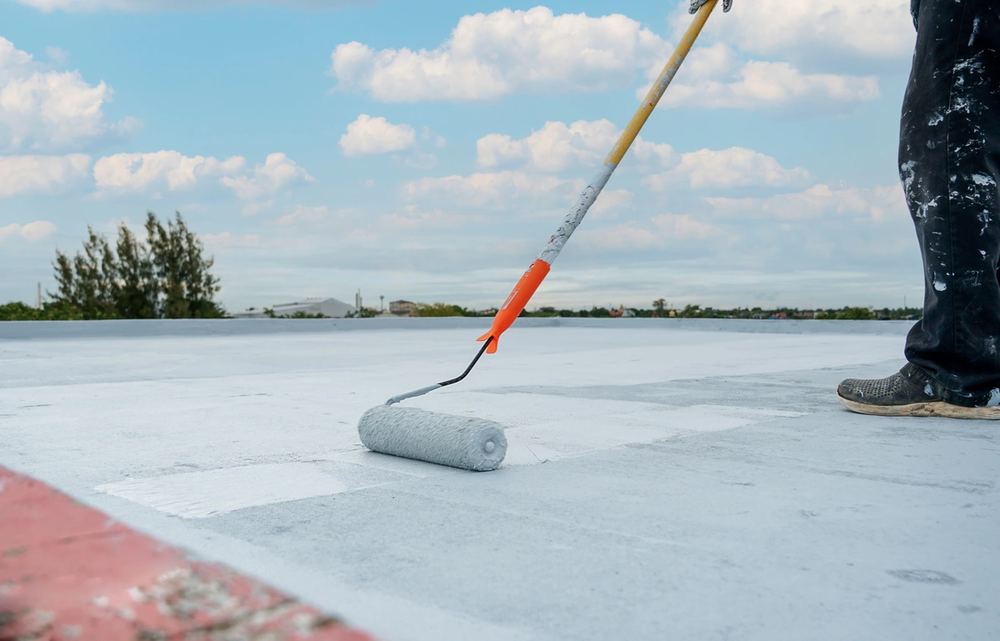
How a roof coating compares in the Valley once service life is counted, and where each one wins.
Comparisons between roofing systems usually get made on price and appearance, which are the two things that matter least in ten years. For a roof coating in the San Fernando Valley, here is what the comparison looks like once service life is included.
What actually matters
A coating is a renewal of a roof that still works, not a repair of one that does not. Applied to the right substrate it can add years for a fraction of a tear-off; applied to the wrong one it seals a problem inside.
The difference that shows up later
Two systems that cost within a dollar of each other on the quote can differ by a decade in service, and the difference is in the detail rather than the material. Wet film thickness is the number that matters. It is measured during application with a simple gauge, and it is the only way to know the roof is getting the millage that was quoted rather than a thinner coat spread further. Ask how it is fixed down and how it drains before asking what it costs.
How the San Fernando Valley settles it
Summer is the problem here. The Valley runs ten to fifteen degrees hotter than the coast and holds it for weeks, so a roof surface that reads 90 degrees in Santa Monica is well past 160 in Van Nuys by mid-afternoon. Everything on the roof expands into that heat and contracts again overnight, and it is that daily movement, not the peak temperature, that opens laps and backs fasteners out. Most of the housing went up between 1950 and 1975, which means original decking, undersized ventilation and at least one previous layer that somebody roofed straight over rather than tearing off.
What we look at on an inspection
- Substrate moisture, established before anything is quoted
- Adhesion, confirmed by test patch rather than assumed
- Surface contamination, chalking and existing coating compatibility
- Seam and penetration reinforcement requirements across the roof
- Ponding areas, which need drainage correction before coating
- Wet film thickness recorded during application
- Manufacturer specification for the substrate actually present
Common questions
Is the more expensive option always longer-lived?
Usually, but not always, and installation quality closes the gap in both directions. A well-installed mid-range system beats a badly installed premium one every time.
Can systems be mixed on one property?
Frequently, and on complex roofs it is often the right answer. Low-slope sections and steep sections genuinely want different materials.
The honest summary
A coating over a sound, dry, properly prepared roof is one of the best-value things available. Over wet insulation it is money spent trapping the problem where nobody can see it. In the San Fernando Valley the thing to watch is attic temperature and intake ventilation, because a Valley attic that cannot breathe cooks the underside of the roof as hard as the sun cooks the top.
Free inspection, drone photography where access is difficult, and a written estimate with deck repair priced per sheet. No obligation.