
Temporary Repairs That Do Not Cause Harm — A Practical Guide
What the warranty on storm damage in the foothills actually covers, and what quietly voids it.
Roofing warranties are widely advertised and rarely read. For storm damage in the foothill communities, here is what they actually cover and what quietly voids them.
What actually matters
Storm damage is a moment in time, and documenting it properly matters as much as repairing it. What is recorded in the first forty-eight hours decides how the rest of the process goes. Warranties are written against the product, so they cover only part of that system.
Why the warranty number is not the answer
Read what voids it before you read what it covers. Ventilation shortfalls and later work by other trades account for most of the refusals we see. Temporary protection has to be done in a way that does not cause its own damage. A tarp fixed through a sound part of the covering creates new holes in a roof that did not have them. Anything that puts a new penetration through the roof should be documented at the time.
What is specific to the foothill communities
Fire exposure changes the specification before weather is even discussed. Ember fall, not flame, is what starts most roof fires, and embers find their way into ventilation openings, under tile at the eave and into any gap at the ridge. Everything else here follows from that: heat, tree overhang and debris load are real, but the fire detail comes first. A mix of older custom homes and newer builds, frequently under mature tree cover that drops debris into the valleys year-round.
What we look at on an inspection
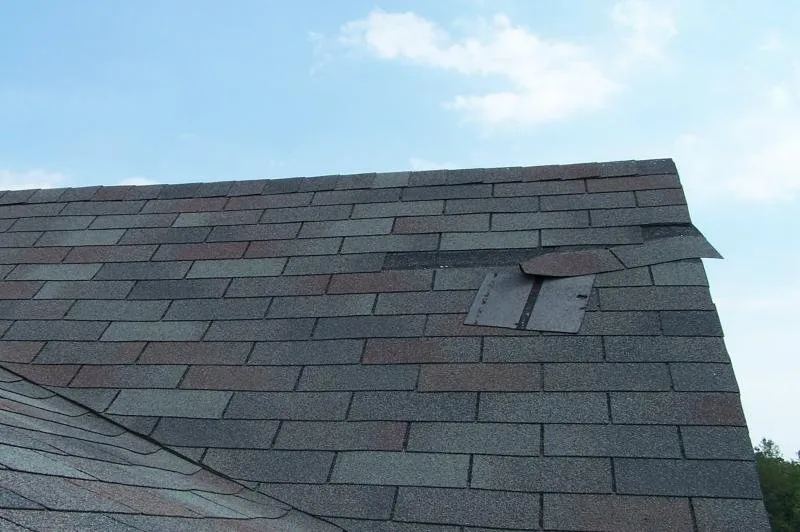
- Displaced, lifted or missing units, slope by slope
- Seal integrity on the windward elevation, checked by hand
- Ridge, hip and perimeter fixing after wind loading
- Impact marks, splits and any debris strike on the surface
- Flashing displacement at walls, chimneys and penetrations
- Gutters and downpipes for detachment and blockage
- Interior and attic inspection for water entry already in progress
Common questions
What is the difference between the two warranties?
The manufacturer covers the product against defect. The contractor covers the installation. Most failures are installation, so the second one matters more.
What voids a warranty?
Inadequate ventilation, unapproved alterations and, frequently, work by another trade. Anything that puts a penetration through the roof should be documented.
The honest summary
Get it documented, get it protected without adding damage, then get it assessed properly. Those three things in that order account for most good storm outcomes. In the foothill communities the thing to watch is ember-resistant detailing at eaves, ridges and vents, plus tree overhang and debris in every valley.
Free inspection, drone photography where access is difficult, and a written estimate with deck repair priced per sheet. No obligation.