
Clay vs Concrete Tile in the the Valley Climate — Costs and Timelines
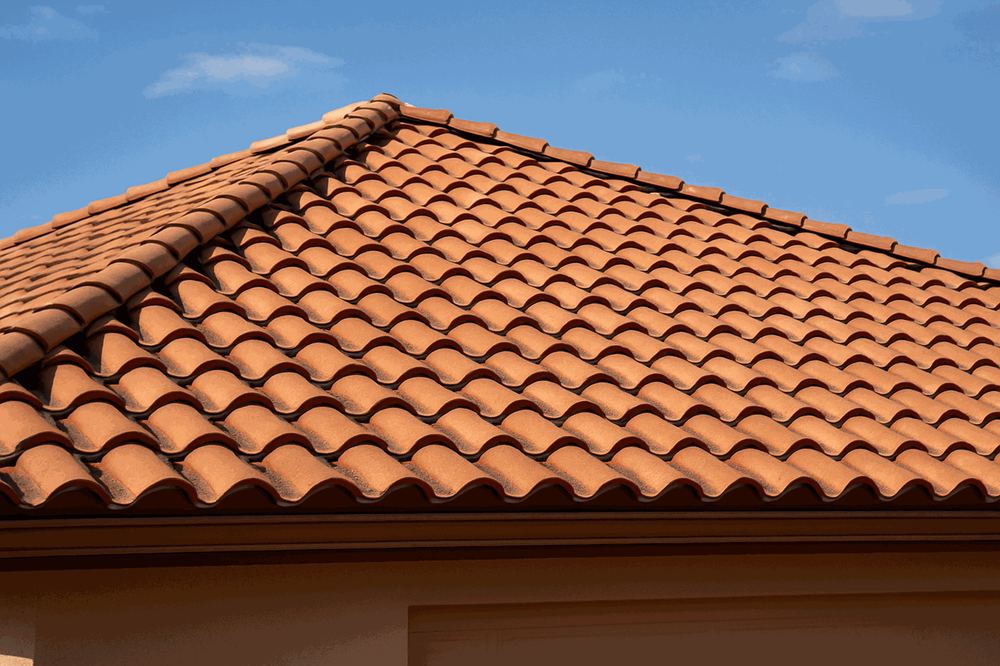
What moves the number on a tile roof in the Valley, and what a quote should already include.
Price is the first thing anybody wants and the last thing most contractors will commit to. The working figure for a tile roof in the San Fernando Valley is $11.00 to $19.00 a square foot for a full underlayment replacement with the existing tile relaid, and the rest of this explains what moves it, because the same roof can differ by half again depending on things you can check yourself before anyone quotes.
What you are actually paying for
The tile itself is usually salvageable, so the cost is mostly labour: lifting and stacking, replacing underlayment and battens, then relaying. Breakage rate during lift-off matters, and so does whether matching replacements for the broken ones are still available.
Where quotes diverge
Deck repair should be priced per sheet in writing before work starts, because it is the one item nobody can size until the covering comes off. Bird stops, eave closures and the mortar at the ridge are what most quotes leave out. Leave them off and you have an open roof edge that invites nesting, debris and, in the fire zones, embers. It is also the line that most often separates two quotes that looked identical on page one.
How the San Fernando Valley changes the figure
Summer is the problem here. The Valley runs ten to fifteen degrees hotter than the coast and holds it for weeks, so a roof surface that reads 90 degrees in Santa Monica is well past 160 in Van Nuys by mid-afternoon. Everything on the roof expands into that heat and contracts again overnight, and it is that daily movement, not the peak temperature, that opens laps and backs fasteners out. Most of the housing went up between 1950 and 1975, which means original decking, undersized ventilation and at least one previous layer that somebody roofed straight over rather than tearing off.
What we look at before quoting
- Underlayment age and condition, checked by lifting tile rather than guessing
- Broken, slipped and previously face-nailed tiles across the field
- Batten condition and fixing, particularly at the eave course
- Valley metal, which usually corrodes before the underlayment fails
- Ridge and hip mortar or mechanical fixing, and any movement in it
- Bird stops and eave closures, present and intact
- Flashing at walls, chimneys and every penetration through the field
Common questions
Why is one quote thousands cheaper than another?
Almost always because it excludes something. Compare the deck repair rate, the layer count and whether flashing is being replaced or reused before you compare totals.
Can I get an accurate price without an inspection?
You can get a range. You cannot get a price, because nobody knows the deck condition until the covering comes off, which is why the per-sheet repair rate belongs in the estimate.
The honest summary
Judge a tile roof by its underlayment, not its tile. A roof that looks flawless from the driveway can be two winters from a ceiling repair, and the only way to know is to lift a few tiles and look. In the San Fernando Valley the thing to watch is attic temperature and intake ventilation, because a Valley attic that cannot breathe cooks the underside of the roof as hard as the sun cooks the top.
Free inspection, drone photography where access is difficult, and a written estimate with deck repair priced per sheet. No obligation.
More on Tile Roofing
- Matching Discontinued Tile Profiles in the LA Basin — What to ExpectTile Roofing
- Matching Discontinued Tile Profiles in the San Fernando Valley — What Changed This YearTile Roofing
- Matching Discontinued Tile Profiles in Burbank — What to ExpectTile Roofing
- Matching Discontinued Tile Profiles in the LA Basin — What Changed This YearTile Roofing